CISOs: See the Business Impact Before a Cyber Incident Cascades
Fusion connects cyber events to the business services they affect. When an incident hits, CISOs can trace the impact, understand what happens next, and prioritize response using current, governed dependency data.
4.4/5 Star Rating on G2
Leader in BCM
BCI World Hall of Fame
4.5/5 Star Rating on Capterra
Security Tools Do Not Show the Business Impact
Security teams can detect and contain an incident quickly. The harder task is determining which services, customer operations, and obligations depend on the affected system, and how disruption could spread.
Technical Signals Lack Business Context
SIEM and SOAR platforms show what happened in the environment. They do not show which business services rely on the affected systems or what the disruption could mean for customers, operations, and revenue.
Third-Party Exposure Is Disconnected
A vendor breach can affect your operations as quickly as an internal incident. Point-in-time questionnaires and vendor inventories rarely show which critical services depend on that third party.
The Questions CISOs Need to Answer at Decision Speed
When a cyber incident is confirmed, can you see its full business impact and make the right recovery decisions with confidence?
Answering that requires a shared view of four questions:
- What is impacted? Which systems, data, applications, and business services are affected?
- What happens next?Where could the disruption spread across connected systems, services, and third parties?
- What is the financial exposure?What is the cost of disruption to the affected business services?
- What should we prioritize?Which systems and services should be isolated, restored, or protected first?
Fusion connects security incidents to business context, helping CISOs answer all four questions at decision speed.
Connect Cyber Events to Business Impact
Bring SIEM, SOAR, GRC, ITSM, and CMDB data into a continuously curated service-and-dependency model. See what an incident touches and prioritize the response using governed business context.

Prioritize Cyber Recovery Across Systems and Services
Fusion Recovery Optimization evaluates application, infrastructure, and business-service dependencies alongside containment constraints and business priorities. CISOs can determine which systems and services should be isolated, restored, or protected first, based on the current business impact.
Recovery Optimization
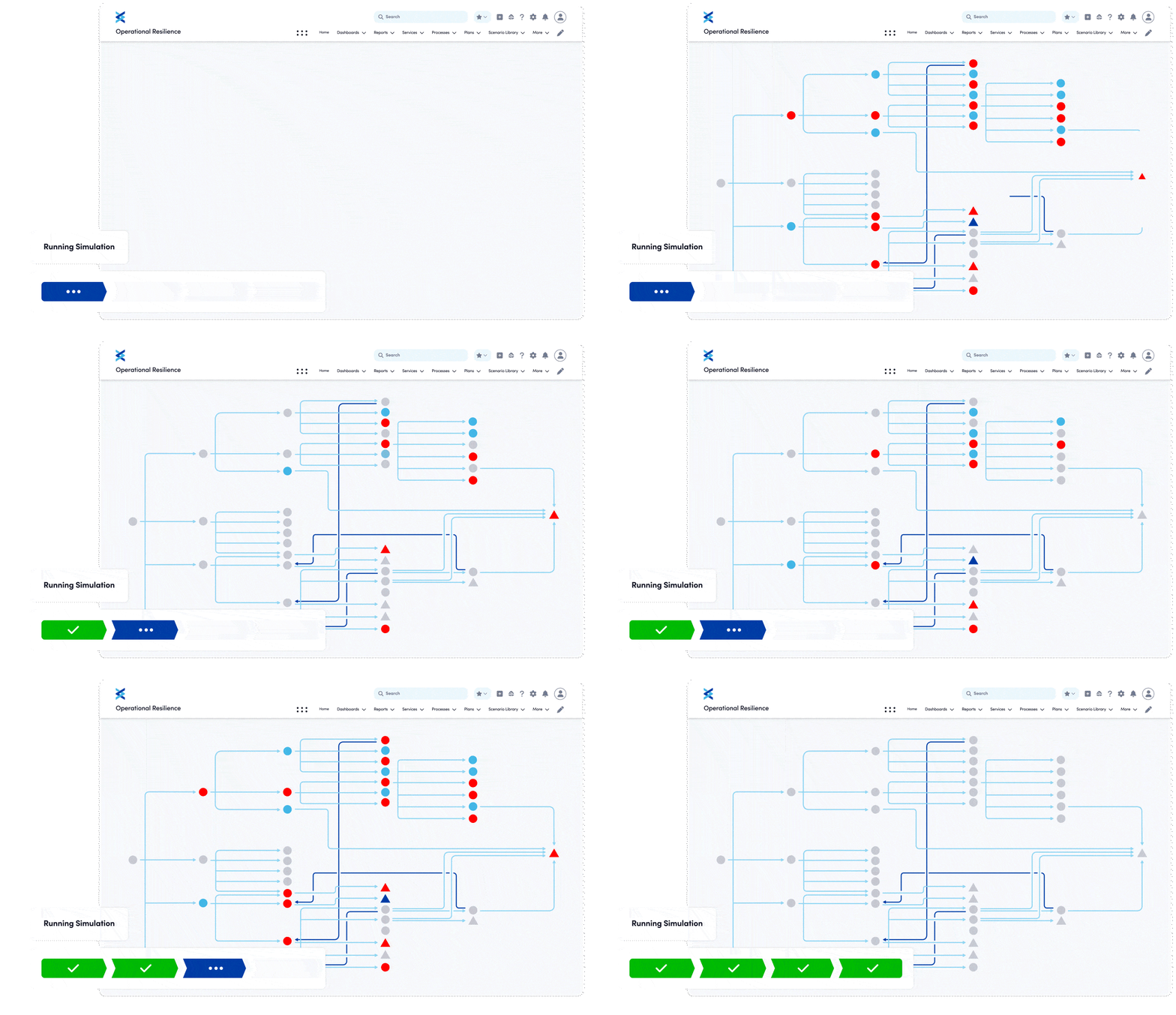
Test Cyber Disruption Before It Happens
Run scenarios across ransomware, breaches, critical vendor compromise, and technology outages. See how disruption could spread, validate recovery assumptions, and identify where plans or dependencies need attention before an incident occurs.
Scenario Testing
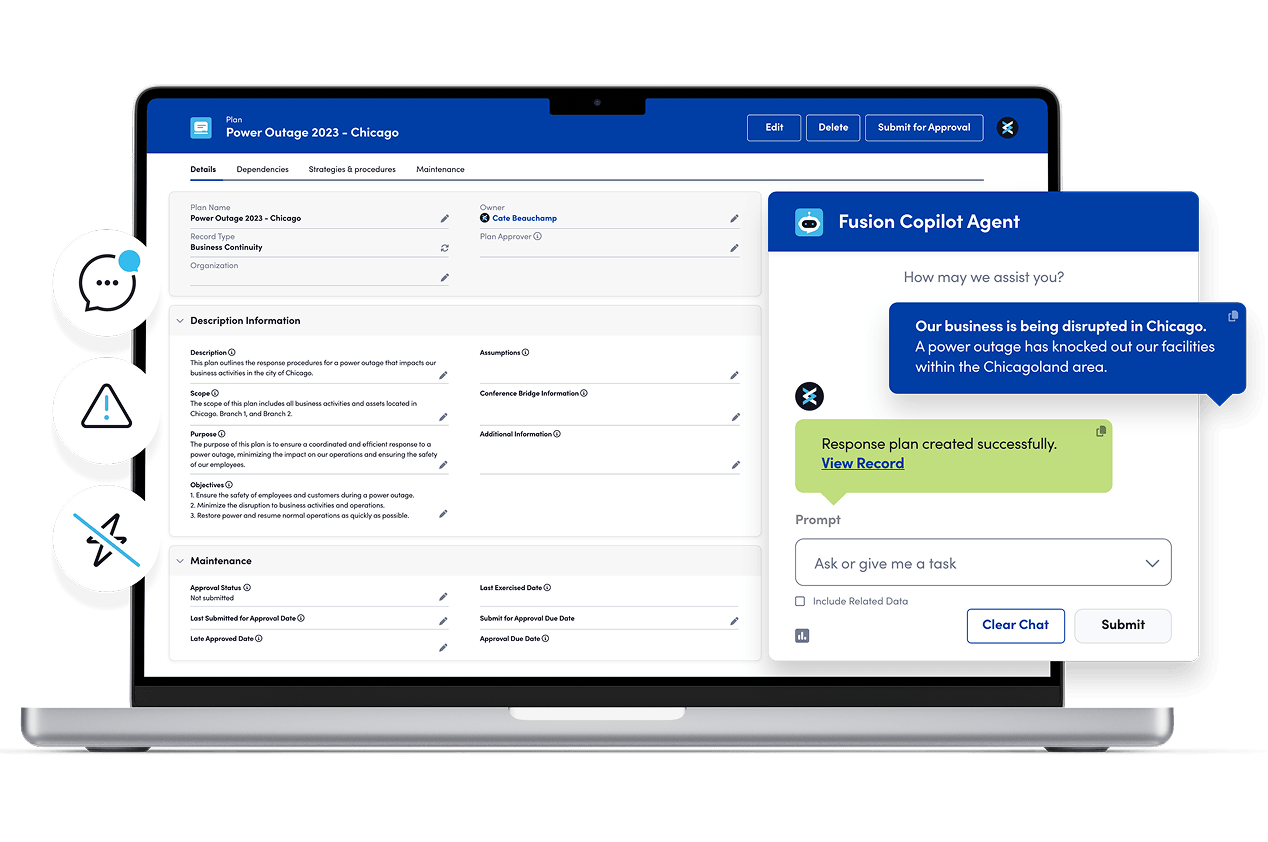
Ground AI-Assisted Response in Governed Dependency Data
AI-assisted recommendations are only as reliable as the data behind them. Fusion grounds response and recovery decisions in a validated, continuously curated service-and-dependency model, reducing reliance on outdated inventories or manually assembled data.
Fusion Intelligence
Case Study
Fusion has made things much easier and improved our workflow. We have a clearer picture of our application portfolio and how the business is using applications, and we are able to focus on truly critical areas.
Manager, Technology Resilience at a Leading Technology Provider
A Cyber Incident Spreads Beyond Security
Without Fusion
During an incident, security, IT, business continuity, risk, and compliance teams often work from different sources of information. The business impact remains unclear while teams reconstruct dependencies, validate the affected services, and determine recovery priorities.
With Fusion
A governed service-and-dependency model connects cyber events to systems, third parties, and business services. CISOs can trace the impact, understand what happens next, and coordinate recovery using a shared, defensible view.
FAQs
Enterprise resilience software helps CISOs understand what a cyber incident touches beyond the compromised system itself. It maps the relationships between systems, applications, and the business services they support, so a security incident’s business impact can be computed at decision speed rather than reconstructed manually while the incident is live.
SIEM and SOAR tools detect, alert on, and help coordinate the technical response to a security event, that’s the job they’re built for, and Fusion doesn’t replace them. Fusion answers a different question: once an incident is confirmed, what business services, revenue, and obligations does it put at risk, and what should be protected or restored first? Fusion sits above your security stack as the decision layer, not inside it.
Fusion grounds AI capabilities in validated, governed dependency data. Recommendations can account for the organization’s current applications, infrastructure, business services, recovery requirements, and operational constraints instead of relying on outdated documentation.
Yes. Fusion integrates with SIEM and SOAR platforms, ITSM systems, CMDB tools, and GRC platforms. GRC platforms are essential systems of record; Fusion operates as the decision layer above them, purpose-built to answer the four questions systems of record were never designed to answer: what is impacted, what happens next, what is the financial exposure, and what should be prioritized.
This is the core risk CISOs face with AI-assisted response today: recommendations are only as reliable as the data they’re grounded in. Fusion anchors AI capabilities to a validated, continuously curated service-and-dependency model, reducing the risk of hallucinated or outdated recommendations while an incident is live.
Rather than assembling board and regulatory reporting after the fact, Fusion keeps a continuously curated view of dependencies, tested response scenarios, and recovery sequencing, so the evidence needed for SEC, DORA, or NIS2 reporting reflects your current environment and is a by-product of the same system your team uses to respond to incidents.


Connect Cyber Risk to Business Exposure
An Exposure Brief connects cyber risk to critical services, dependencies, financial exposure, and the recovery decisions that require leadership attention.