AI at Fusion
AI Built for Enterprise Resilience Decisions
When disruption hits, your organization must answer four questions at decision speed:
- What is impacted?
- What happens next?
- What is the financial exposure?
- What should we prioritize?
Generic AI tools that are trained on public data and disconnected from your enterprise cannot answer these questions reliably. Fusion’s AI is different.
 Scroll Down
 Every capability is grounded in your validated enterprise dependency model. Purpose-built for the decisions that resilience leaders, finance executives, and operations teams must make under pressure.
What AI cannot replicate is what Fusion has built over two decades: a continuously curated model of enterprise dependencies, informed by operational evidence across thousands of disruptions, dependency changes, and recovery events across the customer base. Competitors can build with AI. But they cannot replicate the data, the cross-customer operating context, or the compounding intelligence that makes Fusion’s AI outputs trustworthy when the decisions are consequential.
How Fusion Approaches AI Integration
Not all AI delivers the same value in a resilience context. Fusion deploys AI where it accelerates value and withholds it where it introduces risk.
- Fusion’s Speed Layer is where AI automates preparation work: data ingestion, strategy drafting, scenario design, executive reporting.
- Fusion’s Trust Layer is where validated enterprise data governs decisions: dependency modeling, impact quantification, cascading failure simulation, recovery optimization, and regulatory evidence.
AI amplifies whatever it is grounded in. An AI system generating recovery plans from stale or unvalidated data produces confident-sounding output that may be wrong when it matters most.
The organizations that lead in resilience maintain the most trusted, continuously curated model of their enterprise, and simply apply AI on top of it.
Speed Layer
AI Accelerates
BIA data collection
AI pre-populates from HR, IT assets, and supply chain systems. Guided workflows reduce contributor burden for occasional users.
Recovery strategy drafting
AI-generated initial strategies based on your organizational context, risk profile, and historical patterns.
Scenario generation
AI-recommended exercise scenarios informed by your specific risk profile and dependency structure.
Executive reporting
AI-recommended exercise scenarios informed by your specific risk profile and dependency structure.
Data quality monitoring
flagging stale dependencies, inconsistent recovery objectives, and unvalidated recovery options.
Trust Layer
Validated Models Govern
Dependency model construction and validation. The relationships between services, processes, and assets that determine how disruption cascades through the organization.
Impact quantification and financial exposure modeling with regulatory-grade auditability. Every recommendation is traceable to a validated data source.
Cross-entity simulation and cascading failure analysis. Monte Carlo-style permutations surfacing non-obvious outage paths across the full dependency model.
Recovery optimization
mathematically sequenced recovery under competing resource constraints, team capacity limits, and service priority hierarchies.
Regulatory compliance mapping across DORA, PRA/FCA, FFIEC, CPS 230, and ISO 22301. Evidence chains are explainable, traceable, and tied to validated data.
The Fusion Difference
Grounded in Your Data, Not Generic Assumptions
Fusion's AI operates on your organization's validated service-and-dependency model; your services, processes, vendors, and recovery objectives. It does not draw on public training data to produce your plans.
Backed by Human Oversight
Every AI output is transparent, traceable, and subject to human review before action is taken. Fusion's AI is designed to support your team's judgment, not substitute it.
Integrates with Your Existing Data Environment
Fusion connects to the enterprise systems your data already lives in, HR platforms, IT asset management, GRC tools, supply chain systems, ensuring AI capabilities operate on current, accurate information from day one.
Built with Regulations in Mind
AI outputs on Fusion are explainable, auditable, and tied to validated enterprise data. Designed to meet the evidence standards that DORA, PRA/FCA, and OCC now require, Fusion was built not just to produce documentation but proof.
AI Only Where It Earns Its Place
AI can be found at the core of every Fusion solution, but Fusion deploys it selectively, at the points in the resilience workflow where it delivers the most value: automating data preparation, simulating scenarios at scale, and delivering guidance grounded in your validated enterprise model.
You will encounter AI when you need a complex process accelerated, a large data set analyzed, or a set of scenarios run across thousands of permutations. The rest of the time, your team is doing the work that requires human judgment. Fusion is the system that makes that judgment faster, more accurate, and more defensible.
Ingestion and Mapping
BC Plan inFusion uses AI-powered automation to convert your static business continuity documents into dynamic, actionable data, pre-populating BIAs, mapping dependencies, and flagging gaps for human review.
Explore BC Plan inFusionScenario Testing
Scenario Testing runs thousands of permutations against your validated dependency model, surfacing cascading failures, tolerance gaps, and non-obvious outage paths that manual testing cannot reach.
Explore Scenario TestingEmbedded AI Guidance
Fusion Intelligence, including Resilience Copilot, delivers on-demand answers grounded in your enterprise model. Automates executive reporting, compliance documentation, and board-ready resilience briefings. Informed by Fusion’s two decades of resilience domain expertise.
Explore Fusion IntelligenceAI Embedded into the Work You’re Already Doing
Fusion’s AI capabilities are integrated into the workflows your team already follows. From the first day of deployment, AI reduces the manual burden of data entry, scenario design, and reporting, so your team can focus on the decisions that require human expertise.
Fusion does not ask you to change how you work. It accelerates the parts that are currently slow and makes the decisions that follow more grounded.
Builds Plans and Documents at Decision Speed
Fusion Intelligence generates reports, plans, and compliance documentation grounded in your current dependency model, not templates, but outputs tied to your validated enterprise data. Your team reviews and approves; Fusion does the assembly.
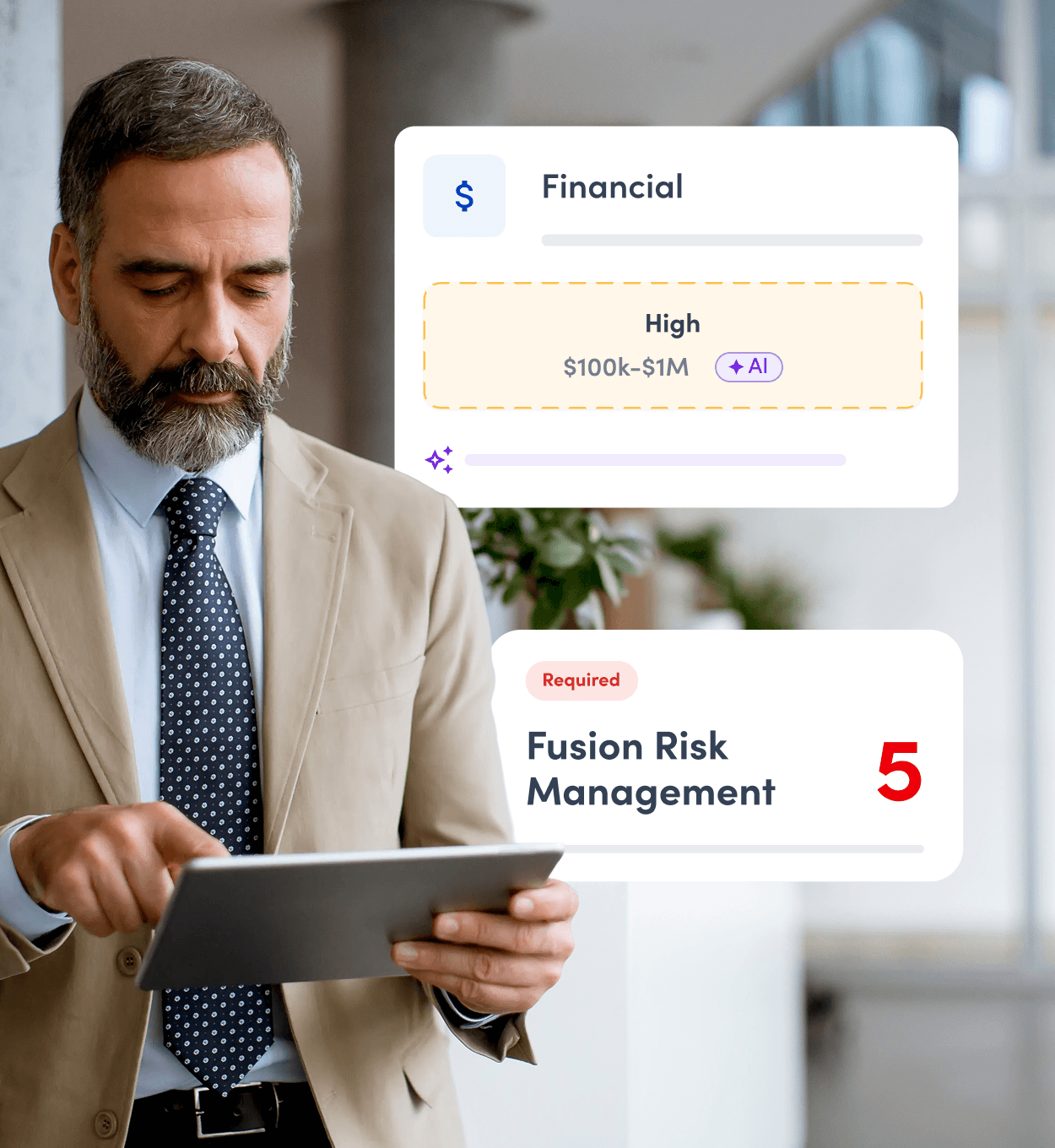
Tests Scenarios at Enterprise Scale
Scenario Testing eliminates human bias from the scenario testing process. Thousands of permutations of your specific scenarios surface cascading impact paths your team could not model manually, answering ‘What happens next?’ before disruption does.
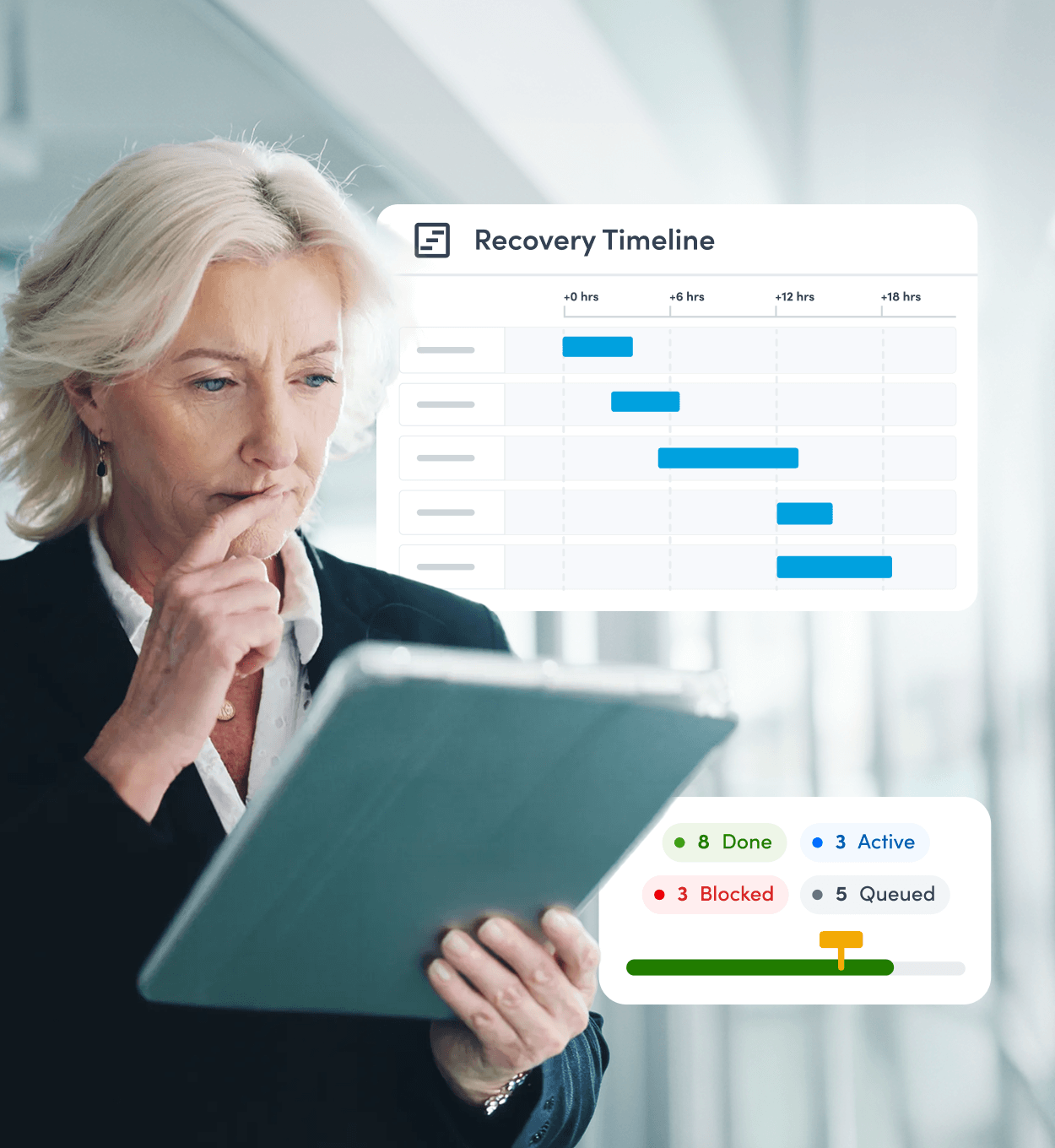
Responds When Disruption Occurs
Recovery Optimization sequences recovery automatically when an event is active, based on your service priorities, resource constraints, and validated recovery time objectives. Your team executes; Fusion determines the optimal sequence.
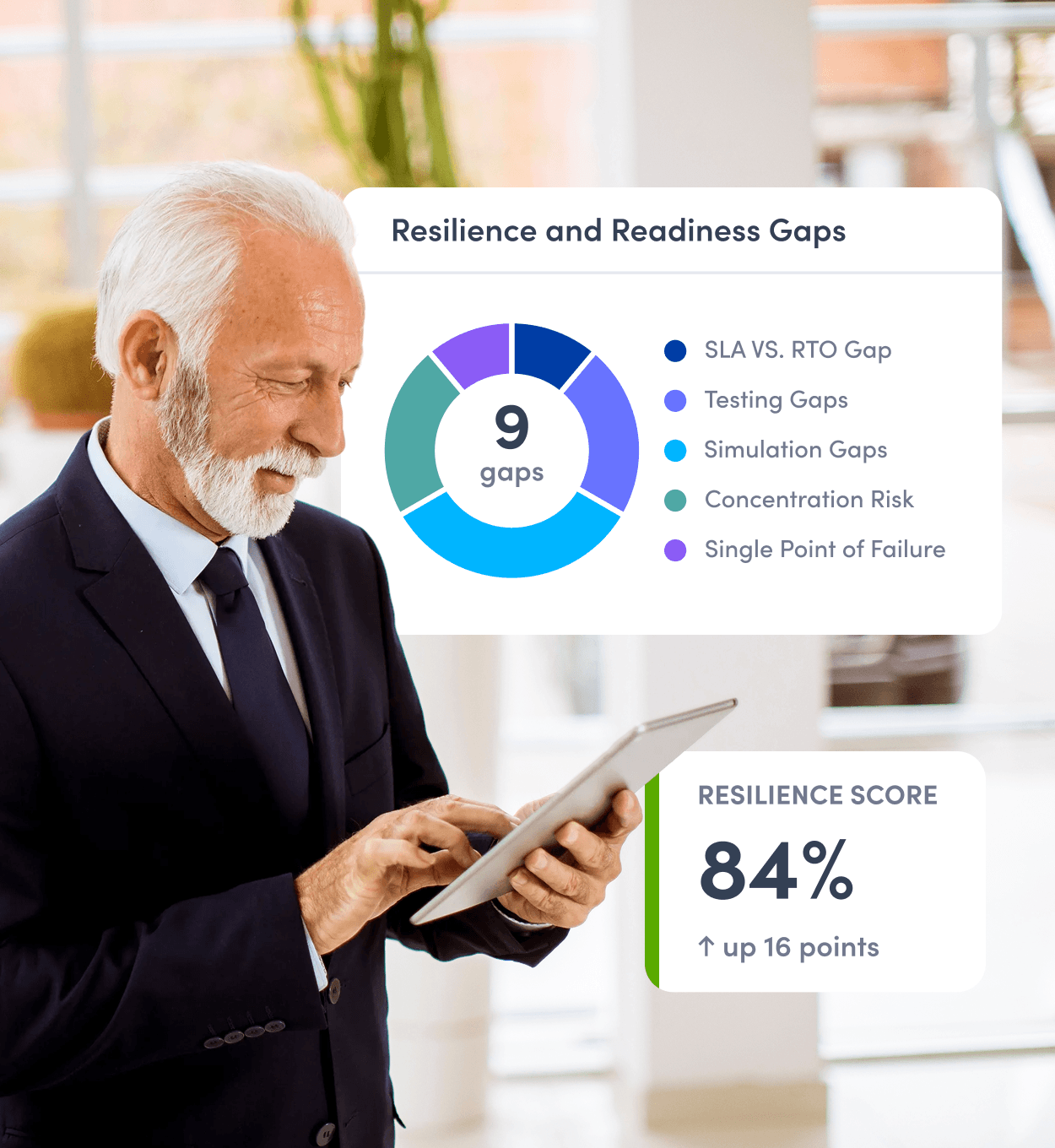
Improves as Your Enterprise Changes
As your dependency model is updated, new vendors, new systems, and organizational changes, Fusion Intelligence recalibrates its guidance. The model compounds value with every update cycle, improving the accuracy of every subsequent recommendation.

Fusion Also Integrates with Your Current Platforms Supported platforms include:
Compliance Evidence Regulators Can Trust
Regulators no longer accept documentation as proof of compliance. DORA, PRA/FCA, and OCC now require demonstrable evidence: tested recovery capabilities, measured tolerance outcomes, traceable impact analysis, and auditable evidence chains that can be produced on demand.
Fusion’s AI was built to meet this standard. Every output is explainable, traceable, and anchored to your validated enterprise dependency model, not generated from templates or generic assumptions. This is the difference between documentation that satisfies a regulator and evidence that withstands one.
Regulatory Use Cases
DORA Register of Information
Financial services organizations use Fusion’s continuously updated Register of Information and AI-assisted dashboards to maintain ongoing DORA compliance. When your dependency model changes, your Register of Information updates, not at your next annual review, but as part of normal platform operation.
Scenario Testing Evidence
Scenario Testing produces structured testing evidence for regulators — machine-readable test records tied to your validated dependency model, not spreadsheet logs. Regulators can audit exactly which scenarios were run, against which dependencies, with which outcomes.
Board Governance Reporting
Fusion Intelligence generates board-ready resilience posture briefings that give leadership the financial exposure quantification, service impact analysis, and recovery confidence they need to fulfill governance accountability under PRA/FCA, OCC, and FFIEC requirements.
Operational Resilience Tolerance Evidence
For regulated firms subject to PRA SS1/21 and equivalent frameworks, Fusion’s dependency model enables documented tolerance testing and impact tolerance measurement — with every test result traceable to the specific services, processes, and systems it covered.
Companies That Rely on Fusion’s AI
Organizations generating over $7 trillion in combined revenue rely on Fusion for their
most critical resilience decisions.
Fannie Mae shares how it leverages Fusion to seamlessly track and manage potential gaps in critical roles and remediate associated risks.
Read More
Boston Scientific Corporation tells their story of how they utilize Fusion to score and assess all of their supplier and vendor risks.
Read More
How a leading healthcare insurer strengthened business continuity with a data-driven approach, improving visibility, accelerating response times, and ensuring resilience at scale.
Read More
AI Capabilities Incorporated into Each Area of Resilience
Every Fusion solution integrates AI to amplify your organization’s resilience capabilities. Whether you are automating preparation work, running scenario analysis, or generating on-demand compliance evidence, the same validated enterprise model governs every output.
Fusion does not bolt AI onto existing workflows. AI is embedded at the points in each solution where it reduces the most friction and produces the highest-quality decisions.

Operational Resilience
OpRes Scenario Testing runs thousands of scenario permutations against your validated dependency model, surfacing cascading failures and tolerance gaps before events occur.

Business Continuity
BC Plan inFusion uses AI to automate data ingestion and dependency mapping, converting your static documents into a dynamic, continuously updated program. AI helps your team focus on decisions, not data entry.

IT Disaster Recovery
Recovery Optimization automates recovery sequencing for your IT environment, based on service priority hierarchies, resource constraints, and validated recovery time objectives.

Crisis and Incident Management
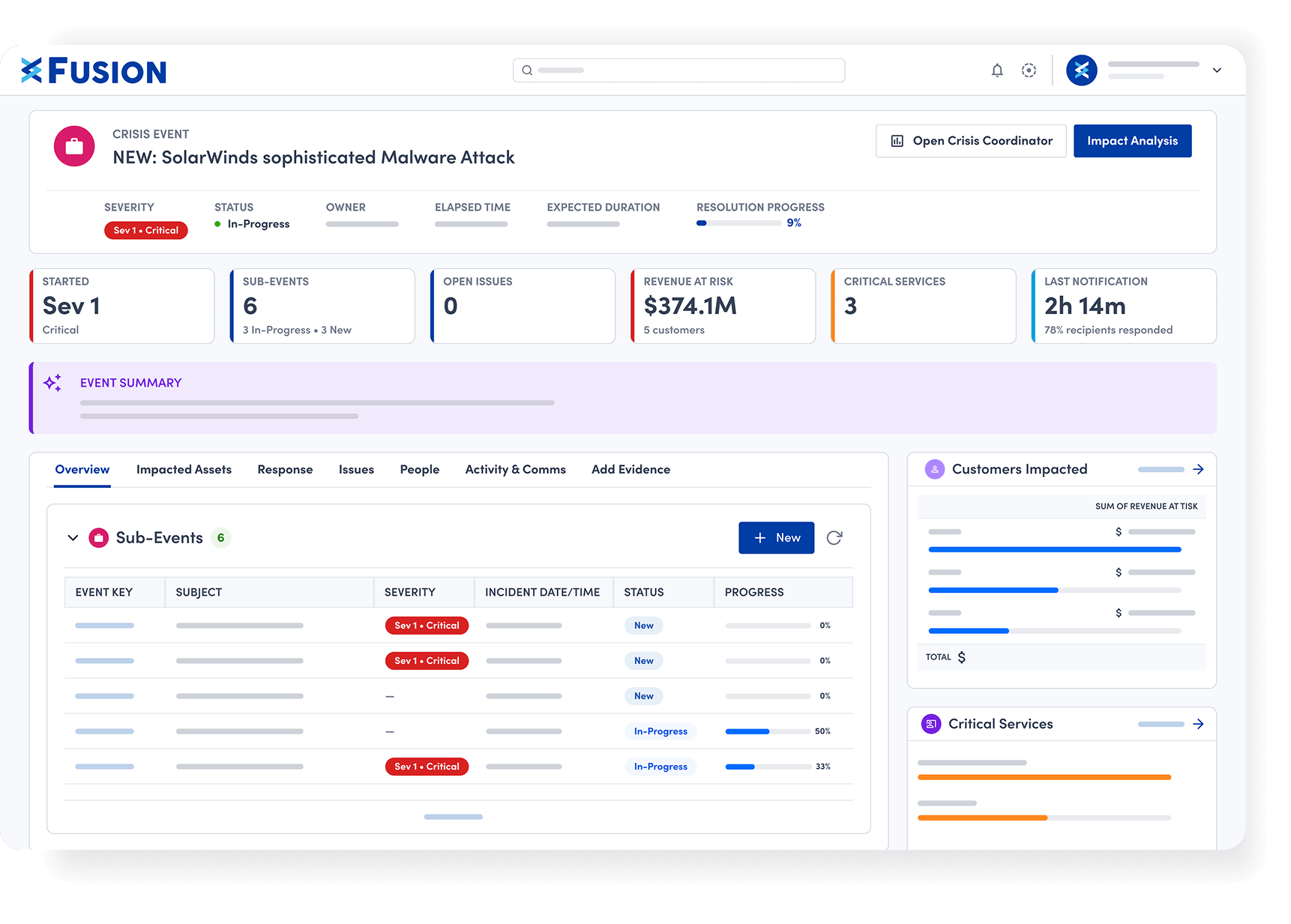
Fusion’s AI surfaces impact cascades at decision speed when a crisis is active, identifying which services are affected, what will be impacted next, and which response actions take precedence.

Third-Party Risk Management
Fusion’s AI automates vendor due diligence, maps third-party dependencies to service delivery impact, and enables scenario pre-modeling of critical supplier failure before events occur.

Operational Risk
Fusion gives your risk team a consolidated view of organizational risk and dependency exposure, with AI-generated analysis that surfaces the decisions requiring attention, grounded in your validated enterprise model.
Fusion Intelligence
Fusion Intelligence is Fusion’s AI-powered guidance layer. Resilience Copilot delivers on-demand answers and automated reporting grounded in your enterprise model. Available across every Fusion solution.


How Do I Get Started with Fusion?
Request a Demo
See Fusion in action with a live, personalized demo from a resilience expert who understands your industry and use case.
Schedule a demoTalk to an Expert
Connect with a Fusion resilience specialist to discuss your specific challenges, regulatory requirements, and program goals.
Contact an expertAI at Fusion FAQs
Your organization’s data — your services, dependencies, vendors, and processes — informs every Fusion AI output. Fusion does not use your data to train outputs for other customers, and does not process personal information for this purpose. Fusion is committed to robust data security: encryption, logical tenant isolation, role-based access controls, and regular third-party security assessments and testing. Fusion Risk Management holds ISO 42001 certification, the AI management standard for responsible, transparent governance of AI systems.
AI is embedded in Fusion at the platform level. BC Plan in Fusion automates data ingestion. Scenario Testing runs scenario analysis at enterprise scale. Fusion Intelligence, including Resilience Copilot, delivers on-demand guidance and automated reporting. These are not optional modules — they are part of how the platform works. Your team does not need to set up a separate AI environment or integrate a third-party tool.
General-purpose AI generates confident-sounding output from public training data. For resilience planning, that is a material problem: a recovery plan built on unvalidated data can direct your team toward actions that are dangerously wrong — referencing systems that no longer exist, teams that have changed, or vendors with expired contracts. Fusion’s AI is grounded exclusively in your validated enterprise dependency model. It cannot hallucinate a recovery sequence that relies on resources your organization no longer has.
There is a second gap general-purpose AI cannot close: cross-organizational context. Any organization building AI-based resilience tooling from scratch starts from a sample of one. No peer baseline. No cross-customer benchmarks. No operational evidence from how similar enterprises have navigated similar disruptions under similar regulatory frameworks. Fusion is informed by more than twenty years of resilience practice across its customer base — cross-customer operating intelligence that no single enterprise can generate for itself.
General-purpose LLMs automate documentation. Fusion governs decisions grounded in the deepest resilience knowledge base available. Those are different products solving different problems.
Fusion makes it straightforward to consolidate and improve data quality as part of deployment. BC Plan inFusion automates the process of transforming static documents — plans, spreadsheets, legacy files — into dynamic data within the platform. Fusion’s native integrations and REST API connectors reach the enterprise systems where your operational data already lives, including HR platforms, IT asset management, and supply chain systems. Gaps and inconsistencies are flagged for human review rather than silently assumed. The dependency model improves as your team works with it.
As your organization changes, your dependency model updates — and Fusion Intelligence recalibrates its guidance accordingly. Because Fusion automates data ingestion and dependency mapping, new vendors, systems, and organizational changes are incorporated without requiring a manual model rebuild. When personnel change, automated documentation reduces the risk of knowledge gaps. The model compounds value with every update cycle.
BC Plan in Fusion handles the migration. Drag and drop your existing static files — plans, BIAs, spreadsheets — and Fusion converts them into dynamic, actionable data within the platform. Automation does not just reduce migration effort: it lets your team begin gaining insight from the dependency model before the full implementation is complete. Your existing work becomes the foundation the model builds on.