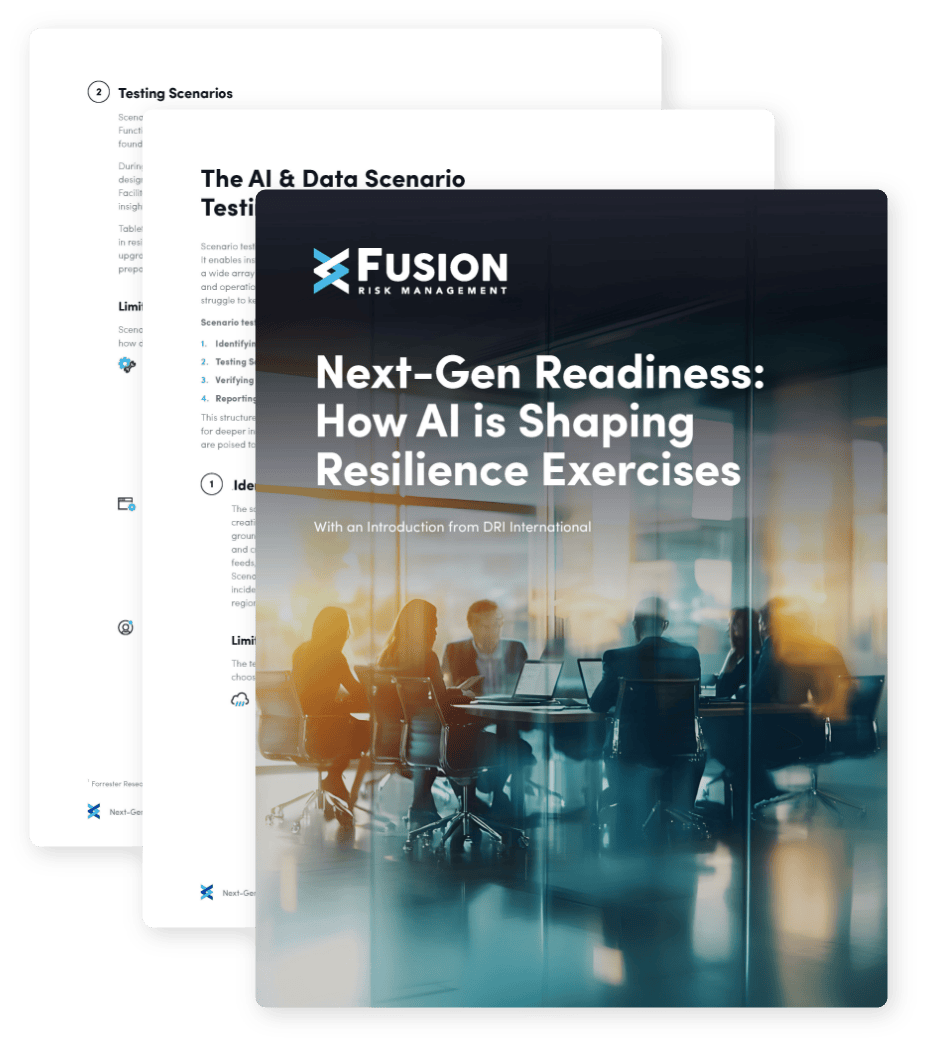

Featuring an Introduction from DRI International
Resilience exercises are only as strong as the insight they produce.
This whitepaper brings together practical guidance on how organizations are strengthening resilience testing using data and AI, featuring an introduction from DRI International. It focuses on improving how scenarios are built, tested, evaluated, and communicated, so exercises reflect real operating conditions.
Get the whitepaper to learn how to:
- Expand scenario testing beyond static, familiar events
- Use data and AI to identify gaps with greater objectivity
- Improve testing depth without increasing manual effort
- Turn exercise results into insight leaders trust
- Strengthen readiness through continuous improvement
PREVIEW
Introduction by DRI International
Short of an actual incident, the best indicator of how successful a resiliency program will be in a crisis is objective, focused, measurable testing that is participatory and engages key stakeholders.
Testing typically begins with tabletop exercises, designed to ensure that the actions required in recovery plans (the verbs) are supported by the necessary resources (the nouns). These exercises can then escalate to more complex exercises that place the organization under controlled conditions simulating the loss of critical resources.
Testing serves as a valuable way to assess an organization’s ability to operate during a crisis. Not only does it reveal weaknesses in plans, allowing for corrective action, but just as importantly, it fosters a sense of calm and confidence in the organization’s capacity to respond to disruptions effectively.